Team
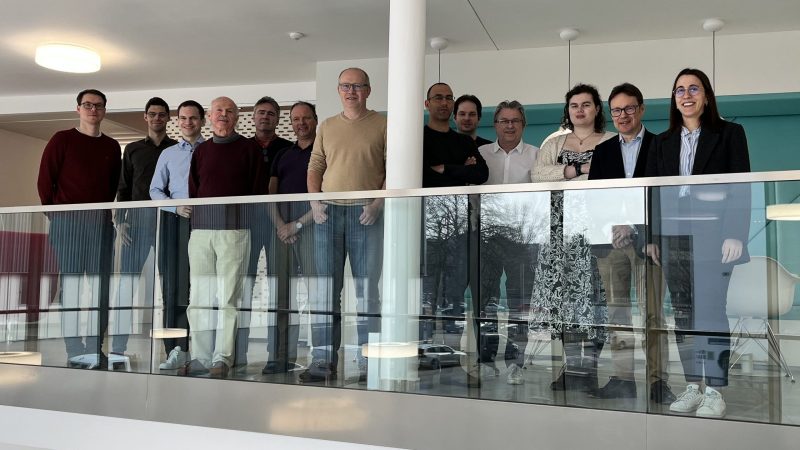

Vienna, Austria

Yokneam, Israel

Glasgow, United Kingdom

Frankfurt/Oder, Germany
AIT Austrian Institute of Technology has about 1.500 employees working on the development of the tools, technologies and solutions for Austrian industries that are of utmost relevance for the future. As Austria’s largest non-university research institute, AIT, is at the forefront of industrializing quantum communication. Building on Nobel laureate Anton Zeilinger’s pioneering work, AIT has become a leader in quantum cryptography, advancing terrestrial and satellite-based communication technologies.
AIT plays a significant role in the European Quantum Flagship program and the EuroQCI initiative, focusing on creating high-security quantum infrastructure across the EU.
The research in QOSiLICIOUS complements this expertise through its focus on miniaturizing the devices required for quantum communication. Further current projects are including QCI-CAT and PETRUS, which are critical to developing Europe’s next-generation quantum communication networks. QCI-CAT is driving forward the development of a quantum communication infrastructure for highly secure government applications in the EU and implementing specific applications in Austria. In this context, the AIT is also working at the national level on projects such as QKD4GOV on quantum-safe cryptography for the transmission of confidential information between authorities as part of the national KIRAS funding programme for security research, which is funded by the Austrian Federal Ministry for Finance (BMF). The PETRUS project aims to establish a European cyber defence shield over the next ten years based on a quantum communication infrastructure consisting of terrestrial and satellite-based solutions. Furthermore, AIT plays a major role in the Nostradamus initiative which has also been commissioned by the European Commission to build a testing infrastructure for quantum key distribution (QKD) in Europe. This will enable the evaluation of European manufacturers’ QKD devices.
NVIDIA’s invention of the GPU (graphics processing unit) in 1999 sparked the growth of the PC gaming market, redefined computer graphics, ignited the era of modern AI and is fueling the creation of the metaverse. NVIDIA is now a full-stack computing company with data-center-scale offerings that are reshaping industry.
NVIDIA accelerated networking solutions, featuring NVIDIA Quantum InfiniBand and Spectrum Ethernet Platforms, gives enterprises infrastructure flexibility to support develop-to-deploy implementations across all modern workloads and storage requirements that enable a new era of accelerated computing to maximize AI investments.
The University of Glasgow was founded in 1451 making it the fourth-oldest university in the English-speaking world. It is renowned for its pioneering contributions to science and technology and is home to the James Watt Nanofabrication Centre; a > 1200 m2 cleanroom facility housing >£35M of state-of-the-art fabrication and metrology equipment. The Centre for Quantum Technology at Glasgow unites physicists, engineers, and computer scientists to advance quantum research and innovation with a focus on translating quantum science into practical applications and therefore aligns strongly with the goals of QOSiLICIOUS, fostering the development of secure communication technologies through Si based Quantum Key Distribution.
The IHP (Leibniz-Institut für innovative Mikroelektronik) is one of the world’s leading centers for high-speed silicon-germanium technology. Based on a 200mm pilot line the IHP has been able to provide high-performance BiCMOS and silicon photonics technologies to external partners while conducting cutting-edge research and development into silicon-based systems, high-frequency circuits and technologies for wireless and broadband communication. The institute makes significant contributions to enhancing the innovative strength and competitiveness of Germany and Europe in the area of silicon-based integrated RF systems.